
Beyond Disruption: Forging an Antifragile Supply Chain
A single supplier bankruptcy can idle a production line before the morning shift starts. By afternoon, expediting costs are climbing, customer delivery dates are slipping, and your leadership team is making margin decisions with incomplete information. For industrial operators, that is not a theoretical risk. It is a board-level problem.
In aerospace and advanced manufacturing, supply chain failures hit far beyond procurement. Missed shipments drive customer escalations. Excess inventory consumes cash that should fund growth. Emergency freight cuts into EBITDA. During diligence, the same weaknesses surface fast. Lenders, private equity firms, and strategic buyers look closely at supplier concentration, continuity planning, regional exposure, and how much of the business depends on a few fragile nodes.
I have spent more than 25 years building and scaling industrial companies, and the pattern is consistent. Resilience raises enterprise value when it is designed into the operating model. It improves earnings quality, supports PE-backed growth plans, and reduces the discount buyers apply when they see concentration risk or brittle capacity. It also takes discipline. Every resilience decision carries a trade-off in working capital, complexity, lead time, or capex.
The lesson from the last several years is straightforward. Major disruption is part of the operating environment, not an exception. The manufacturers that held up best did not rely on a single fix. They made deliberate choices about supplier mix, inventory posture, capacity flexibility, visibility systems, and financial structure so they could absorb shocks without losing strategic momentum.
The 10 strategies that follow are the ones I have seen work in practice, not only to protect continuity, but to strengthen valuation, improve M&A readiness, and give leadership teams more control when conditions turn against them.
Table of Contents
- 1. Supplier Diversification and Geographic Distribution
- 2. Just-in-Case JIC Inventory Strategy with Safety Stock
- 3. Supply Chain Visibility and Real-Time Tracking Systems
- 4. Supply Chain Risk Assessment and Scenario Planning
- 5. Strategic Partnerships and Collaborative Supply Networks
- 6. Manufacturing Flexibility and Modular Production Capacity
- 7. Near-Shoring and Localization Strategies
- 8. Digital Supply Chain Transformation and Industry 40 Implementation
- 9. Supply Chain Financing and Working Capital Optimization
- 10. Redundancy and Resilience in Critical Operations
- 10-Point Comparison of Supply Chain Resilience Strategies
- From Strategy to Competitive Advantage
1. Supplier Diversification and Geographic Distribution
A fire shuts down a sub-tier plant in one region. Within days, your production schedule slips, customer calls start, and finance is recalculating the quarter. I have seen that sequence too many times in aerospace and advanced manufacturing. Single-source supply keeps margins tidy right up to the moment it puts revenue at risk.
Supplier diversification is a design decision. CEOs who treat it as a procurement tactic usually act too late. The right approach starts with a hard question. Which parts can stop shipments, trigger contractual penalties, or weaken your position in diligence if a buyer or lender reviews supplier concentration?

What works in practice
Dual sourcing earns its keep when it is built around critical components, approved processes, and geographic separation. In regulated manufacturing, a second supplier is only useful if the quality system, tooling, process capability, and documentation are already in place. If first article inspection is unfinished, the backup source is still theoretical.
Toyota shows the upside of distributed supply with disciplined operational control. Boeing shows the other side of the equation. A broad supplier network can increase access to capacity and specialized capability, but complexity rises fast when oversight, configuration control, and supplier development lag behind the footprint.
For industrial leaders, strategy meets enterprise value. Private equity firms and acquirers look closely at concentration risk. If one supplier, one country, or one plant can interrupt growth, they discount the story. Diversification does more than protect operations. It improves the quality of earnings by reducing the odds that a single disruption will hit delivery performance, margin, and customer retention at the same time.
A practical program usually includes three moves:
- Segment by business impact: Separate revenue-stopping parts from parts with easy substitutes. Castings, forgings, electronics, specialized machining, and approval-heavy components deserve different sourcing rules.
- Qualify alternates early: Complete quality approval, tooling validation, and first article work before disruption forces the decision.
- Split regional exposure: Two suppliers in the same risk zone do not give real protection against labor actions, weather events, grid instability, or trade restrictions.
Practical rule: Dual source the part itself, with approved capacity in different regions, not just the purchase order.
The trade-off is straightforward. Diversification can raise unit cost, reduce volume discounts, and add engineering workload. It may also require duplicate tooling or supplier development spend. Those costs are visible, which is why weak leadership teams defer them.
The return is also straightforward. A stopped line costs more than a second qualified source. So does a missed delivery on a strategic program. So does an M&A process where the buyer finds that too much EBITDA depends on one vendor relationship. This is the same discipline strong operators use in adjacent areas such as inventory management optimization, where policy follows business risk rather than habit.
Done well, supplier diversification protects continuity, supports PE-backed scale, and makes the business easier to underwrite. That is why I treat it as a value-building decision, not overhead.
2. Just-in-Case JIC Inventory Strategy with Safety Stock
A line goes down on a Friday because a $14 approved component is missing. Revenue slips. Expedites start. The customer asks for a recovery plan by Monday. I have seen that sequence too many times to treat low inventory as a virtue on its own.
Just-in-case inventory works when it is selective, costed, and tied to business exposure. In aerospace and advanced manufacturing, that usually means carrying safety stock on long-lead parts, approval-heavy components, sole-source items, and materials with volatile replenishment. The objective is not more inventory. The objective is protecting throughput, margin, and customer commitments when supply fails.
That distinction matters for enterprise value too. Buyers, lenders, and PE sponsors do not reward excess stock sitting on the balance sheet. They do reward a business that can ship through disruption, defend EBITDA, and avoid single-point failures in critical programs.
Where JIC actually earns its keep
The best candidates are the parts that are painful to replace under pressure. Specialized fasteners with certification requirements, semiconductors with unstable lead times, machined subcomponents tied to constrained capacity, rare alloys, and custom electronics often belong in that group. If requalification takes months and a missed shipment puts a contract at risk, safety stock is usually cheaper than downtime.
Commodity items are different. Carrying extra stock on easy-to-source parts ties up cash without improving resilience in any meaningful way.
A disciplined policy starts with segmentation. Criticality, lead time, qualification burden, margin impact, shelf life, and obsolescence risk should all drive the stocking decision. If your team is rebuilding that logic, this guide to inventory management optimization is a useful reference for connecting stock policy to operating performance.
What to stock, and what to fix elsewhere
Safety stock should protect known constraints. It should not cover for weak forecasting, poor production planning, or supplier underperformance. I treat those as separate operating problems because mixing them creates expensive confusion.
Use JIC inventory with clear rules:
- Protect revenue-critical parts: Buffer the items that stop shipment or delay a high-margin assembly.
- Account for decay and obsolescence: FIFO matters, but so do revision control, shelf life, corrosion risk, and engineering change exposure.
- Set explicit reorder points: Strategic inventory needs min-max levels, trigger logic, and ownership. Without that discipline, buffers become excess.
- Review cash impact by SKU class: The right stock policy improves service levels. The wrong one inflates working capital and weakens returns.
Selective safety stock protects output. Broad safety stock usually protects bad habits.
Done well, JIC gives the business time to recover from shocks without sacrificing delivery performance. Done poorly, it hides execution problems and traps cash that could fund capacity, automation, or acquisitions. The return comes from precision, not from filling every rack in the warehouse.
3. Supply Chain Visibility and Real-Time Tracking Systems
A plant manager calls at 6:10 a.m. A critical assembly is short. Purchasing shows the PO as open, the supplier says material shipped, and logistics cannot confirm where the load sits. At that point, the ERP has history. It does not give you control.
Visibility earns its keep when it shortens response time and improves decisions under pressure. For manufacturers with complex bills of material, multiple sites, and PE-backed growth targets, that matters beyond operations. Buyers and investors want evidence that leadership can see exposure early, contain disruption, and protect EBITDA during integration or scale-up.

Build visibility around decisions, not dashboards
I have seen companies spend heavily on control towers that produced attractive screens and weak operating results. The failure usually starts with scope. They try to map everything at once instead of targeting the few failure points that can stop shipments, miss customer commits, or trigger premium freight.
Start with the lanes, suppliers, and part families that carry the highest financial consequence. In aerospace and advanced manufacturing, that often means long-lead components, sole-source items, quality-sensitive materials, and cross-border flows with customs risk. A narrower first deployment usually gets faster adoption because planners, buyers, and plant leaders can tie the system directly to actions they already own.
The system also needs to reach past your four walls. If supplier data stops at a weekly email or a manually updated spreadsheet, you still have blind spots. A practical operating model combines supplier status, in-transit location, lead-time drift, and exception workflows so teams know who needs to act, by when, and with what fallback option. For companies formalizing those controls, this framework for manufacturing risk management in industrial operations is a useful companion.
What a useful system should do
The right visibility stack supports intervention, accountability, and capital discipline.
- Connect to core execution systems: Tracking data should feed the ERP, planning tools, and supplier portals your team already uses.
- Flag exceptions early: Buyers and planners need alerts for shipment delays, supplier capacity constraints, lead-time drift, and quality holds.
- Show tiered exposure: Direct supplier status is not enough if a sub-tier bottleneck can shut down a revenue-critical program.
- Tie events to financial impact: Teams should be able to see which delay threatens customer service, margin, or working capital, not just which load is late.
- Support scenario response: A visibility tool should help teams expedite, reallocate inventory, shift production, or trigger alternate sourcing.
Market adoption is following that logic. Analysts at SNS Insider report that risk management and monitoring solutions hold the largest share of the supply chain resilience software market, while cloud deployment is growing quickly, according to SNS Insider's market breakdown. Industrial operators are funding systems that scale across plants and supplier networks because manual reporting breaks down once the business adds product complexity, acquisitions, or global sourcing.
Predictive capability is the next layer. Historical tracking explains what happened. Better systems help teams estimate what is likely to slip next week based on supplier behavior, transit variance, and production signals. For a practical view of that shift, Refact's AI automation insights show how predictive analytics can improve response speed and planning quality.
Visibility also affects enterprise value. During diligence, acquirers test whether management can prove supplier performance, concentration risk, and recovery paths with current data. Companies that can show that discipline look easier to scale, easier to integrate, and less likely to surprise a lender or sponsor after close.
4. Supply Chain Risk Assessment and Scenario Planning
Most companies say they manage risk. Far fewer can show a current risk register, a ranked supplier exposure model, and a documented response plan that operations, quality, finance, and legal have all reviewed.
That gap matters because today's failures rarely arrive one at a time. A supplier may face sanctions pressure, a cyber incident, labor instability, and climate-related disruption at once. S&P Global's analysis argues that resilient supply chains now require holistic risk analysis across sustainability, cyber, financial, reputational, legal, and continuity dimensions, which is why narrow sourcing reviews no longer go far enough, as explained in S&P Global's perspective on geopolitical and supply chain resilience.
Rank failure modes, then assign controls
I've seen teams waste months building giant risk matrices that never change behavior. The better approach is to tie each major failure mode to a control.
If the threat is geopolitical concentration, map supplier tiers and qualify alternatives. If the threat is cyber exposure, tighten supplier access and data segregation. If the threat is multi-shock overlap, run scenario simulations that force trade-off decisions before the crisis.
For a practical operating framework, Hasit Vibhakar's approach to manufacturing risk management aligns well with how industrial leaders should think about resilience. Teams that want to strengthen forecasting and disruption sensing can also review Refact's AI automation insights on predictive analytics in supply chains.
What good scenario planning looks like
- Use cross-functional ownership: Procurement alone can't assess contract exposure, liquidity stress, or customer penalty risk.
- Stress the critical few: Focus on sole-source items, long-lead materials, constrained capacity, and customer-specific approvals.
- Write response playbooks: A risk review without an action owner, trigger point, and fallback path is only documentation.
If your team can't answer “what do we do in the first 24 hours?” the scenario plan isn't finished.
This work improves more than continuity. It improves lender confidence, board oversight, and exit readiness. Serious buyers want to know whether risk is visible, prioritized, and managed like an operating system.
5. Strategic Partnerships and Collaborative Supply Networks
Transactional sourcing breaks first under pressure. The supplier remembers who only called to negotiate price.
Strategic partnerships are different. They involve demand visibility, technical collaboration, executive relationships, and a willingness to solve problems together before they become shortages. That's especially important in advanced manufacturing, where supplier capability directly influences quality, qualification speed, and product performance.
Treat key suppliers like part of your extended factory
Toyota's supplier development model remains relevant because it built capability, not just bargaining power. Boeing, major OEMs, and advanced industrial groups all rely on deeper engagement with Tier 1 partners when the part is difficult, regulated, or capacity constrained.
This doesn't mean every supplier deserves strategic treatment. It means your most critical suppliers should have a different operating rhythm from commodity vendors. Hasit Vibhakar's guidance on supplier relationship management fits this reality well. You need formal reviews, escalation paths, and shared improvement agendas.
Build a strategic supplier tier
Create a defined group of suppliers that receive more access, more forecast visibility, and more senior attention. In return, ask for transparency, responsiveness, and continuity support.
- Share forward demand intelligently: Suppliers can't plan capacity around surprise releases.
- Run joint business reviews: Review quality, delivery, capacity, engineering changes, and upcoming risks together.
- Support capability where justified: In some cases, supplier development, tooling support, or process assistance protects your own output more than it helps theirs.
What doesn't work is calling every vendor a partner while treating all of them as interchangeable. Strategic collaboration should be earned and focused. If you spread it too broadly, your team won't have the time to manage it well.
The payoff is real. Strong supplier relationships improve continuity, reduce firefighting, and make your company a preferred customer when capacity tightens. In tight markets, that status is worth more than a small annual price concession.
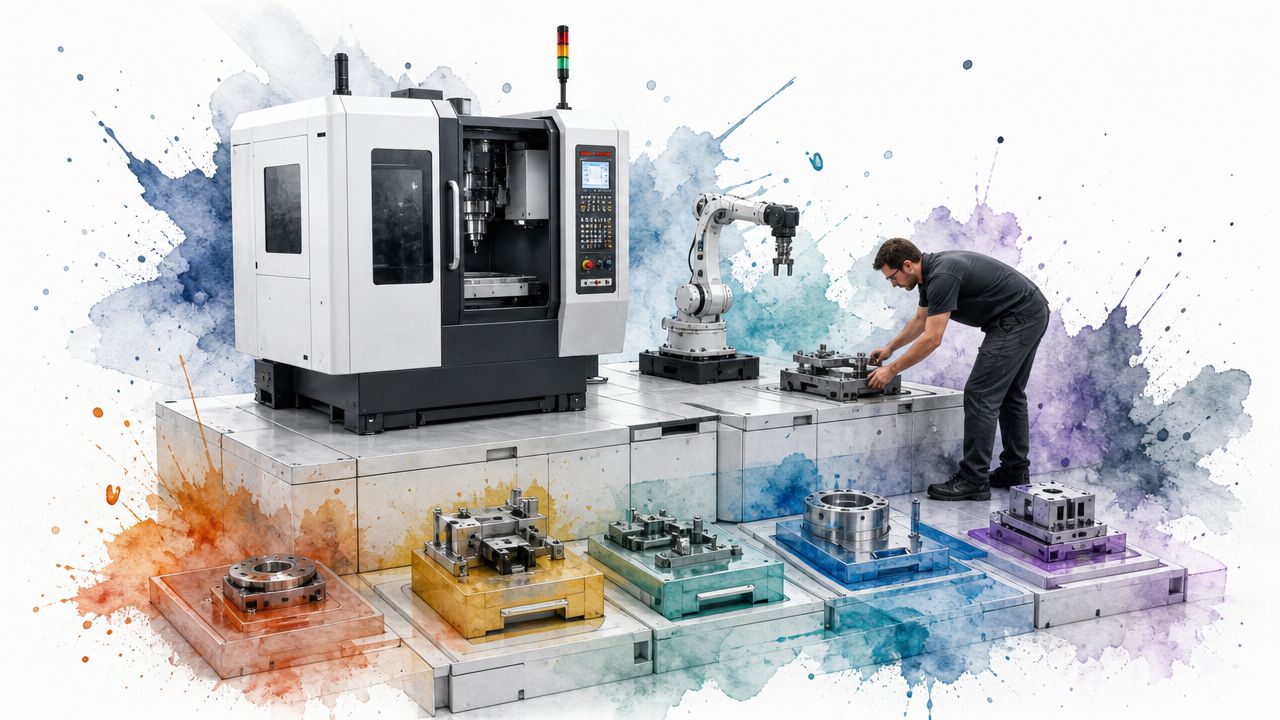
6. Manufacturing Flexibility and Modular Production Capacity
A resilient supply chain doesn't end at the dock door. If your factory can only build one way, then every upstream disruption becomes a revenue problem.
Flexible manufacturing gives leadership options. You can shift production between lines, substitute approved components, change routing, or prioritize high-margin output when supply gets tight. In industrial businesses, that flexibility often saves more value than the original sourcing plan.
Design for options, not ideal conditions
GE, Siemens, and advanced defense manufacturers all offer versions of the same lesson. Flexible equipment, modular product architecture, and reconfigurable lines create room to respond when supply changes faster than engineering drawings.
In practice, the work starts earlier than many teams expect. Engineering has to support alternate material or component qualification. Operations has to reduce changeover friction. Quality has to approve more than one path to conformity.
- Cross-train operators: Skills flexibility matters as much as machine flexibility.
- Reduce changeover time: If line switching is slow and painful, your “flexible” capacity won't get used.
- Modularize where it makes sense: Product architecture should allow approved substitutions without redesigning the entire assembly.
Capacity discipline matters
Too many companies try to maximize utilization on every machine every week. That looks efficient until a disruption hits and there's nowhere to move. A small amount of reserved flexibility can protect your most important shipments and customers.
This short video shows the kind of automated manufacturing environment that supports faster reconfiguration and more responsive production planning:
For private equity-backed operators, manufacturing flexibility also raises the quality of earnings story. It shows the business can absorb shocks, integrate acquisitions more smoothly, and support growth without depending on one rigid production path.
7. Near-Shoring and Localization Strategies
The old offshore-only logic is weaker than it used to be. Lowest unit cost is not the same thing as lowest total risk-adjusted cost.
Near-shoring and localization give manufacturers shorter lead times, easier collaboration, and more control over quality and logistics. They also reduce the number of handoffs between your plant and the customer. In sectors with high service expectations or engineering change frequency, that matters a lot.
When localization wins
Automotive OEMs expanding into Mexico, aerospace suppliers building regional clusters, and electronics firms diversifying toward India or Vietnam all reflect the same operating idea. Put critical supply closer to the market or closer to final assembly when delay costs exceed the labor arbitrage benefit.
This isn't an argument for moving everything. Commodity buys can still stay in cost-optimized regions. The smarter move is hybrid. Keep low-risk categories global and reposition high-risk, long-lead, customer-critical components closer to the point of use.
Bring closer the supply that hurts most when it slips.
How to decide without emotion
The right analysis goes beyond piece price. Compare transportation volatility, lead-time stability, quality escape risk, tariff exposure, communication friction, and the cost of carrying additional inventory because the source is distant.
A localized strategy also helps in diligence. Buyers and lenders see shorter, more controllable supply lines as a sign that growth is more repeatable. That doesn't mean near-shoring is always cheaper. It means it often produces better operating certainty, which can be more valuable than nominal savings.
The execution challenge is real. Regional suppliers may need capability development, process audits, and tighter onboarding support. But if your business depends on responsiveness, compliance, and reliable fulfillment, localization can move resilience from theory into daily operating advantage.
8. Digital Supply Chain Transformation and Industry 40 Implementation
Digital transformation is no longer a branding exercise. In supply chain operations, it should solve three problems: delayed signals, poor decisions, and slow response.
That's why the market is expanding. The global supply chain resilience market is projected at USD 37.76 billion in 2026 and projected to reach USD 75.95 billion by 2033, according to Coherent Market Insights' supply chain resilience market outlook. Companies are buying software, analytics, and monitoring tools because manual coordination can't keep up with modern disruption patterns.
Start with decisions that move cash and service
Industrial leaders get the best ROI when they digitize a narrow, high-value use case first. Demand planning, inventory optimization, supplier risk monitoring, and production replanning usually beat broad platform rollouts with vague goals.
Siemens, Blue Yonder, Kinaxis RapidResponse, and Microsoft-based industrial stacks all point to the same pattern. Data becomes valuable when it changes planner behavior, purchasing timing, and factory scheduling. Not before.
There's also a capability issue. Many businesses install software but leave the underlying process untouched. That usually produces cleaner reports, not better resilience. If you want digital supply chain transformation to work, data governance, ownership, and operating cadence have to be redesigned with the tools.
Keep the roadmap grounded
- Pilot where urgency already exists: Chronic shortages, poor forecast alignment, and unstable supplier performance create obvious starting points.
- Integrate people into the rollout: Buyers, planners, quality teams, and plant leaders need workflows that fit their actual day.
- Scale after proof: Expand once the pilot is improving decision speed and reducing avoidable disruption.
If you're exploring external capabilities in automation and workflow support, AI automation agency offers one example of how firms are approaching applied AI in operations.
The companies that get this right don't just automate. They build a faster management system. That difference is what creates resilience and valuation upside.
9. Supply Chain Financing and Working Capital Optimization
A fragile supplier base often shows up first in cash flow, not in quality metrics. When smaller suppliers are undercapitalized, they delay raw material buys, stretch labor, postpone maintenance, and become far more vulnerable to disruption.
That's why supply chain resilience strategies can't stop at sourcing and operations. Financing matters. Payment terms, early-pay programs, and targeted working capital support can stabilize key suppliers and reduce the odds that financial stress turns into missed shipments.
Protect the supply base without weakening your own balance sheet
Large buyers such as Walmart and major OEMs have long used supply chain finance and early-pay structures to support supplier continuity. The idea is simple. Stronger buyers help reliable suppliers access cash sooner, while still managing buyer liquidity intelligently.
This strategy works best when it's selective. You don't need to finance everyone. You need to identify where supplier stress creates disproportionate production risk.
- Review term pressure: If your terms strain a critical supplier's cash cycle, that pressure can come back as instability.
- Watch inventory and liquidity together: High inventory and weak cash often signal trouble before the formal default.
- Use targeted support: Dynamic discounting, reverse factoring, or bank-supported programs can stabilize a supplier without rewriting your entire payment system.
The trade-off executives miss
Finance teams often optimize payable days while operations teams absorb the disruption cost later. That misalignment destroys value.
A better approach links treasury, procurement, and operations. If a supplier's health directly affects customer delivery, then supporting that supplier may be a better capital decision than carrying emergency inventory or paying for repeated expedite fees. In private equity environments, this kind of working capital discipline is especially important because it shows management understands both liquidity and continuity, not just one side of the equation.
10. Redundancy and Resilience in Critical Operations
Redundancy sounds expensive until you price the alternative. If one machine, one line, one route, or one qualified process can stop a major customer program, then some redundancy is cheaper than recurring exposure.
Many teams make errors in their resilience strategies. They either add no backup at all, or they try to duplicate everything. Neither approach is smart. Redundancy should be surgical.
Put backup where downtime is intolerable
Mission-critical aerospace machining, backup tooling for customer-specific parts, duplicate quality validation paths, second logistics routes, and alternate distribution channels all fit this model. Hospitals do it with backup power. Data centers do it with redundant infrastructure. Industrial businesses should do it where failure directly threatens revenue, compliance, or strategic customers.
The strongest resilience programs combine redundancy with contingency, flexibility, visibility, and collaboration. Those are also the core pillars IBM associates with resilient supply chains, where the organization can anticipate, adapt, and recover from disruptions. Earlier in this article, I touched on how those pillars shape visibility systems. They matter here too.
Make redundancy operational, not theoretical
- Keep backup capability active: A dormant backup that no one uses or tests won't save you.
- Document failover procedures: Teams need exact steps for switching production, routing, or logistics.
- Price resilience transparently: In some customer relationships, the cost of redundancy belongs in the commercial model.
Redundancy is not waste when it protects a high-value promise.
This strategy also strengthens your M&A profile. Buyers look closely at operational single points of failure. If your business depends on one machine family, one facility, or one route with no documented fallback, that risk will show up in valuation discussions. Redundancy, when placed correctly, protects both the operation and the equity story.
10-Point Comparison of Supply Chain Resilience Strategies
| Strategy | Implementation complexity 🔄 | Resource & cost ⚡ | Expected outcomes ⭐ | Ideal use cases 💡 | Key advantages 📊 |
|---|---|---|---|---|---|
| Supplier Diversification and Geographic Distribution | High coordination, longer supplier qualification cycles | Moderate–High (supplier management, audits, monitoring) | ⭐ Reduced single‑point failure risk; improved continuity | Critical/long‑lead components, multi‑region operations (aerospace) | Multiple sources, faster pivot, negotiation leverage |
| Just‑in‑Case (JIC) Inventory Strategy with Safety Stock | Moderate (forecasting, classification, policy rules) | Medium–High (inventory carrying, warehousing) | ⭐ Lower downtime; higher service levels during disruptions | Long lead‑time, high‑value or single‑source parts | Buffer vs disruptions; rapid fulfillment capability |
| Supply Chain Visibility and Real‑Time Tracking Systems | High (system integration, data governance) | High (IoT, platforms, cybersecurity, talent) | ⭐ Faster disruption detection; improved forecasting accuracy | Complex multi‑tier supply chains needing traceability | End‑to‑end visibility; reduced holding periods |
| Supply Chain Risk Assessment and Scenario Planning | Moderate‑High (cross‑functional workshops, modelling) | Medium (analytics, periodic reviews, tools) | ⭐ Identifies & prioritizes risks; actionable mitigation plans | Strategic planning, PE due diligence, BCP development | Proactive preparedness; prioritized mitigation |
| Strategic Partnerships and Collaborative Supply Networks | High (trust building, governance, joint processes) | Medium (relationship management, joint investments) | ⭐ Improved forecast accuracy; joint innovation outcomes | Strategic/high‑impact suppliers, innovation‑driven products | Shared planning, supplier capability uplift |
| Manufacturing Flexibility and Modular Production Capacity | High (reconfiguration, SMED, cross‑training) | High (flexible equipment, skilled labour, tooling) | ⭐ Rapid production pivots; maintained throughput | Multi‑product facilities; volatile demand environments | Production agility; reduced component dependency |
| Near‑Shoring and Localization Strategies | Moderate‑High (facility setup, supplier development) | High (CapEx, transition costs, regional wages) | ⭐ Shorter lead times; improved control & quality | Market‑proximate production; critical components | Faster response; lower transport and regulatory risk |
| Digital Supply Chain Transformation & Industry 4.0 | Very High (data, integration, change management) | Very High (tech stack, data science, long ROI) | ⭐ Predictive optimization; sustained cost and service gains | Large-scale advanced manufacturers seeking scale | Predictive capabilities; automation & continuous improvement |
| Supply Chain Financing & Working Capital Optimization | Moderate (financial integration, platform setup) | Medium (financing fees, platform costs, program discounts) | ⭐ Improved cash flow; reduced supplier insolvency risk | PE‑backed firms; suppliers with cash constraints | Better working capital; strengthened supplier liquidity |
| Redundancy and Resilience in Critical Operations | High (designing failover, testing, governance) | Very High (duplicate assets, maintenance, standby costs) | ⭐ Ensures continuity; minimizes recovery time | Mission‑critical operations (aerospace, defense, data centers) | High availability; protects customer commitments |
From Strategy to Competitive Advantage
The best supply chain resilience strategies don't operate as isolated projects. They reinforce each other. Supplier diversification without visibility creates complexity you can't manage. Safety stock without risk assessment ties up cash in the wrong places. Digital tools without supplier collaboration produce dashboards, not resilience. Real advantage comes from designing these moves as a system.
That leadership mindset is where many companies separate. Businesses that still view supply chain management as a purchasing function tend to react late, buy expensively, and explain too much to customers. Businesses that treat resilience as a strategic capability make cleaner decisions earlier. They know which suppliers matter most, which components deserve buffers, which operations need redundancy, and which risks deserve executive attention before they become financial damage.
For industrial companies, this has direct enterprise value implications. A resilient supply chain protects margin quality because it reduces premium freight, shutdown risk, and costly last-minute substitutions. It protects revenue quality because customers trust suppliers that keep commitments during disruption. It also improves the quality of the management story in front of investors, lenders, and acquirers. A buyer will always pay more attention to a business that can show continuity planning, diversified supply, risk discipline, and operational flexibility than one that only says its team is experienced.
That matters even more in private equity-backed growth. Add-on acquisitions, footprint expansion, and aggressive commercial plans all put pressure on the supply base. If the underlying system is brittle, growth multiplies the problem. If the system is resilient, growth scales with less chaos. That's one of the clearest differences between companies that compound value and companies that repeatedly stall at the same operational ceiling.
There's also a cultural shift required. Leaders have to move beyond the old habit of optimizing every metric for short-term efficiency. Some redundancy is rational. Some extra qualification work is rational. Some inventory is rational. Some supplier investment is rational. The question isn't whether resilience costs money. It does. The key question is whether the return from continuity, customer retention, pricing credibility, and reduced disruption is worth more than the cost. In my experience, for critical industrial businesses, it usually is.
Start with the vulnerabilities that can do the most damage. Map your concentrated suppliers. Rank your long-lead and sole-source components. Test your production flexibility. Review your supplier health. Build one layer at a time. You don't need to solve every weakness in one quarter. You do need to stop pretending that cost optimization alone is a strategy.
The next disruption won't wait for a cleaner budget cycle or a more convenient moment. Leaders who act before they're forced to act protect more than operations. They protect reputation, valuation, and strategic freedom.
If you're evaluating how to strengthen operations, increase enterprise value, or prepare an industrial business for growth, diligence, or exit, Hasit Vibhakar brings decades of hands-on leadership across aerospace, advanced manufacturing, and industrial sectors. His perspective is especially useful for founders, business owners, and private equity leaders who want supply chain resilience strategies that work in the plant, in the boardroom, and in a transaction.



Leave a Reply